Septic Installation in OKC
New and replacement septic systems for Oklahoma City homes, from the soil test and Oklahoma DEQ permit to a working system.
The short answer
The Soil Decides Which System You Can Install
Every new septic system in Oklahoma starts with the lot and the soil. A soil test sets the size and type of system, DEQ approves the design with an Authorization to Construct, and the lot has to have room for the system and its setbacks.
Around Oklahoma City, clay is usually the deciding factor, which is why most new systems in the metro are aerobic. Where the soil allows, a conventional tank and lateral field costs less and needs less upkeep.
Step by step
How a New Septic System Gets Approved
- Check the lot. Size, water source, separation distances and any Water Body Protection Area.
- Test the soil. A soil profile or a percolation test sets the size and type of system.
- Choose the system the soil and lot allow.
- Get the Authorization to Construct from Oklahoma DEQ. The installer normally files it.
- Install, inspect and maintain. Usually a few days on site once the permit and equipment are ready.
Lot and soil
Lot Size, Setbacks and Soil Tests
Oklahoma's minimum lot size for a home on septic is typically half an acre with public water and three-quarters of an acre with a private well. OSU Extension suggests planning about 10,000 square feet, roughly a quarter acre, for the system itself, with room for equipment to get in (PSS-2411). Every part of the system has to sit on your property or in a recorded easement, with set separation distances from wells, property lines and buildings. Within 300 feet of a listed reservoir or stream in a Water Body Protection Area, the rules require an aerobic system with a nitrogen-reducing component.
Soil profile description
Examines soil texture and color at 6-inch intervals down to 48 to 54 inches, or until a limiting layer such as rock or a water-saturated zone. It opens up the most system options and is done by DEQ specialists or DEQ-certified soil profilers.
Percolation test
Measures how fast water moves into the soil at the depth where effluent would go. It can only be used to design a conventional system. Some Oklahoma municipalities want a soil report before they issue a building permit.
System types
Septic Systems Allowed in Oklahoma
| System | Where it fits | Trade-off |
|---|---|---|
| Conventional (tank and laterals) | Deeper, medium-textured soil and enough room | No electricity, least maintenance; not allowed in the heaviest clays |
| Aerobic with spray | Tight clay, shallow rock, smaller areas | No soil test required; needs power, chlorine and twice-yearly checks |
| Aerobic with drip | Similar sites where surface spray is not wanted | No chlorine needed; drip lines 8 to 10 inches deep; higher install cost |
| Lagoon | Larger rural lots | Low tech; must be fenced and kept up, and takes a lot of space |
| ET/A or shallow extended | Specific soil and climate conditions | Need a soil profile; less common in the metro |
System types from OSU Extension PSS-2919; soil and drip details from PSS-2275.
Tanks and permits
Concrete or Plastic Tank, and the DEQ Permit
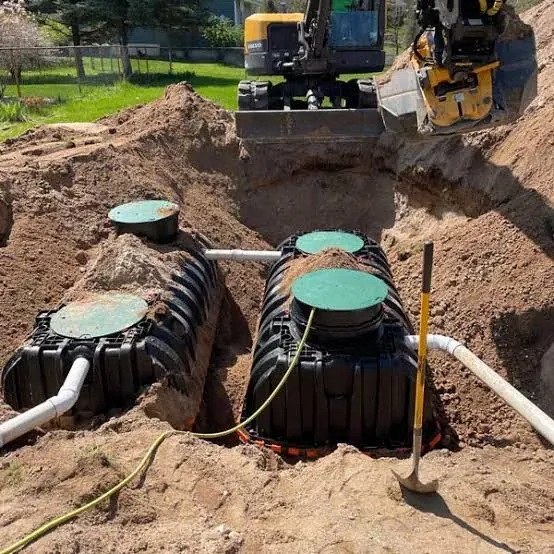
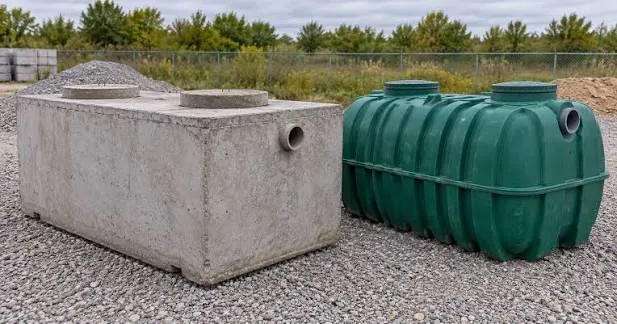
Precast concrete tanks are heavy and rigid and need a truck with a boom to set. Plastic tanks are light enough to move into tight backyards, but they rely on proper bedding and backfill, and an empty plastic tank in waterlogged clay can shift.
All new installations and modifications need a DEQ Authorization to Construct before work starts. A DEQ-certified installer inspects their own work; otherwise DEQ inspects before anything is backfilled, and a non-certified installer is limited to one installation a year. Look up installers through DEQ's on-site sewage program or call DEQ at (405) 702-6100.
An aerobic installer must maintain the system free for two years; plan for aerobic septic service after that, and budget with the septic cost guide.
FAQ
Septic Installation Questions
Do I need a soil test for a septic system in Oklahoma?
For most systems, yes. A soil profile description or a percolation test sizes the system. A percolation test can only be used for a conventional system. Lagoons and aerobic systems with spray irrigation do not require a soil test, though a soil profile is still the best place to start.
Who issues septic permits in Oklahoma City?
The Oklahoma Department of Environmental Quality. Every new installation, and every modification of an existing system, needs an Authorization to Construct from DEQ before work begins. The installer usually files the application for you.
What is the minimum lot size for a septic system in Oklahoma?
Typically half an acre if the home uses public water from a city or rural water district, and three-quarters of an acre if it uses a private well. As a rule of thumb, set aside about 10,000 square feet for the system itself.
Can I install my own septic system in Oklahoma?
State rules allow a non-certified installer to install a system, but only one per year, and DEQ has to inspect the work before it is backfilled or put into use. Systems installed by a DEQ-certified installer are self-inspected by the installer.
Why does my builder want an aerobic system instead of a lateral field?
Usually because of the soil. Tight clay drains too slowly for a conventional field, and the heaviest clay soil group does not allow one at all. Aerobic systems pre-treat the water so it can be sprayed or dripped onto a smaller area.
Free quote
Plan a New Septic System
Send us the address area, the acreage and whether you have a soil test. We will tell you what to expect before anything is dug.
- Pumping, aerobic service, repair and new systems
- All of Oklahoma City
- Price explained before any work starts
Prefer to talk? (405) 913-6058